

Modern policing requires more than technical training and tactical awareness. Officers may need to run, restrain individuals, climb stairs, move equipment, work extended shifts, and respond quickly during physically demanding situations. For this reason, physical conditioning can be an important part of maintaining operational readiness. Research involving law enforcement personnel has linked physical activity and strength training with general and job-specific fitness, while structured conditioning programs have demonstrated improvements in fitness among police recruits.
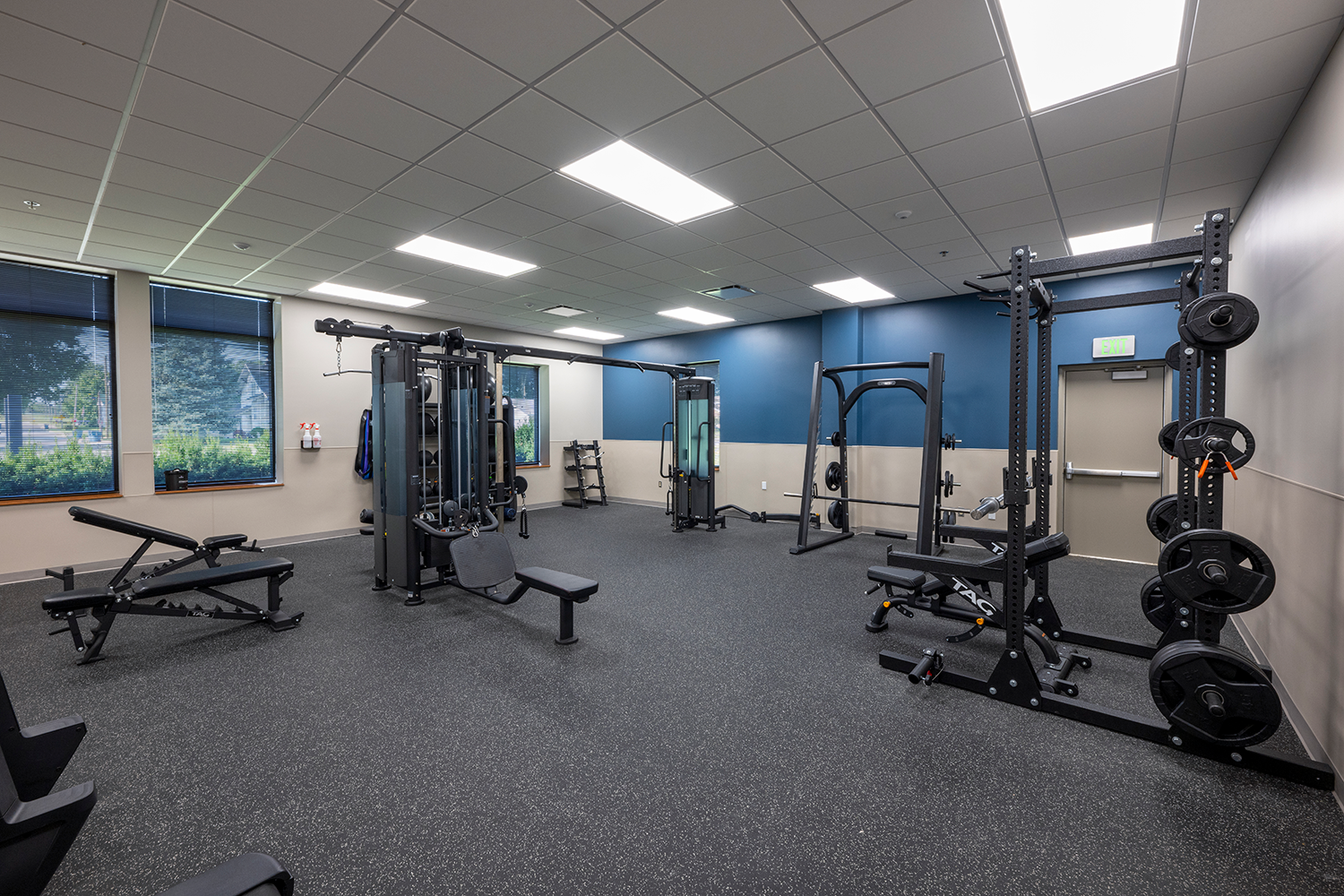
Well-designed Police department weight rooms can provide officers with a convenient place to develop strength, cardiovascular fitness, mobility, and muscular endurance. Rather than functioning as ordinary commercial gyms, these facilities can be designed around the specific physical requirements of police work.
Why Police Departments Need Dedicated Weight Rooms
Police officers can experience highly variable physical demands. A typical shift may involve long periods of sitting or standing followed by sudden bursts of intense activity. Foot pursuits, physical interventions, defensive tactics, lifting equipment, and other duties can require strength and coordination.
A department-based weight room makes regular exercise more accessible. Officers working different shifts can potentially train before or after duty without traveling to an outside gym. Government guidance on police wellness programs also emphasizes that fitness facilities should be accessible at times convenient for employees and should provide equipment that meets their needs.
Dedicated fitness areas are already used by some police organizations. For example, police facilities in Punjab have included gym areas for personnel, while police training programs incorporate physical training and sports as part of officer development.
Designing a Weight Room Around Police Work
The design of a police fitness room should begin with function rather than appearance. The goal is to create a safe, durable, and flexible environment where officers can train efficiently.
A useful layout should provide enough space between equipment for movement, clear walking paths, appropriate flooring, adequate ventilation, and good lighting. Heavy equipment should be positioned securely, while frequently used machines and free-weight stations should remain easy to access.
Departments should also consider lockers, showers, hydration stations, storage areas, first-aid supplies, and cleaning facilities. A well-planned fitness room can become part of a broader employee wellness environment rather than simply being a collection of exercise machines.
Essential Strength Training Equipment
Strength training equipment is one of the most important components of police fitness facilities. A balanced room can include power racks, adjustable benches, barbells, bumper or traditional weight plates, dumbbells, kettlebells, cable machines, and pull-up stations.
These tools can support exercises such as squats, presses, rows, deadlifts, carries, lunges, and pulling movements. The purpose should not be to encourage maximum lifting at every workout. Instead, officers can use progressive and controlled resistance training to develop practical strength while maintaining proper technique.
Specialized police units may have particularly demanding strength requirements. Research on a specialist police unit found that officers were able to maintain and increase several strength measures over an 18-month period while participating in conditioning programs and receiving strength-and-conditioning support.
Cardiovascular Fitness Matters Too
A weight room should not focus exclusively on lifting. Cardiovascular conditioning is also important because officers may need to move quickly over short distances or sustain physical effort during demanding incidents.
Treadmills, rowing machines, stationary bicycles, stair machines, and other cardiovascular equipment can provide different training options. Combining strength work with cardiovascular conditioning allows officers to develop a broader physical foundation.
A mixed approach is particularly useful because officers have different fitness levels, ages, training histories, and occupational responsibilities.
Functional Training for Real-World Demands
Functional training can help bridge the gap between traditional gym exercises and occupational movement. Police department weight rooms can include open floor areas for movements such as sled pushes, loaded carries, medicine-ball exercises, resistance-band work, step-ups, and controlled agility drills.
These exercises can train multiple physical qualities at once, including balance, coordination, grip strength, stability, power, and endurance.
The objective should be practical performance rather than bodybuilding alone. Officers need physical capabilities that complement their tactical training and everyday responsibilities.
Injury Prevention and Long-Term Fitness
A police fitness program should not be based entirely on intensity. Recovery, mobility, proper technique, and gradual progression are equally important.
Poor exercise technique or excessive training volume can increase the possibility of injury. Departments can reduce unnecessary risk by providing clear equipment instructions, encouraging appropriate warm-ups, maintaining equipment regularly, and offering access to qualified fitness professionals where resources permit.
A broader wellness approach can be particularly valuable. Some modern police wellness facilities combine strength and conditioning with recovery, nutrition, and mental-resilience services rather than treating exercise as an isolated activity.
The Role of Strength and Conditioning Professionals
A qualified strength and conditioning coach can make a significant difference in how a department uses its fitness facility. Instead of simply giving officers access to equipment, a coach can help develop structured programs based on individual ability and occupational requirements.
Training can be divided into phases that address strength, endurance, mobility, power, and recovery. Officers returning from injury may also require appropriately modified exercises and professional guidance.
This type of structured approach can help transform a basic gym into a performance-oriented training facility.
Creating a Facility for Different Fitness Levels
Not every officer will have the same training experience. Some may already participate in regular strength training, while others may be returning to exercise after years of inconsistent activity.
Police department weight rooms should therefore provide options for beginners as well as experienced lifters. Adjustable equipment, machines, lighter resistance options, instructional materials, and supervised training sessions can make the facility more inclusive.
The emphasis should be on sustainable improvement rather than competition between employees.
Safety and Equipment Maintenance
Safety should be considered from the beginning of the design process. Weight racks, benches, cables, flooring, cardiovascular machines, and other equipment should be inspected regularly.
Departments should establish clear rules covering equipment use, cleaning, storage, emergency procedures, and reporting of damaged equipment. Staff should also understand how to use unfamiliar machines before attempting demanding exercises.
A clean and organized environment improves usability while reducing avoidable hazards.
Making Weight Rooms Accessible to Shift Workers
Police departments operate around the clock, so a fitness facility should accommodate different schedules whenever possible. Officers working nights should have reasonable opportunities to train just as officers working daytime shifts do.
Access policies can be designed around operational needs, security requirements, staffing, and facility capacity. Some departments may provide extended access, while others may schedule designated training periods.
Accessibility is important because a facility that is difficult to use will not deliver its full wellness value.
Connecting Fitness With Officer Wellness
Physical fitness is only one part of officer wellness. A modern department can consider combining its fitness facility with broader programs involving nutrition, recovery, stress management, peer support, and mental resilience.
This integrated approach recognizes that officers are exposed to demanding work environments and that long-term performance depends on more than muscular strength.
Some police wellness facilities have adopted this broader model, incorporating fitness, recovery, rehabilitation, and other wellness resources into the same environment.
Measuring the Success of a Police Fitness Facility
Departments can evaluate their weight rooms by looking beyond attendance numbers. Useful measures may include employee participation, equipment utilization, fitness improvements, injury trends, employee feedback, and program completion rates.
Surveys can also help determine which equipment and classes officers actually want. Federal guidance on police wellness programs specifically recommends evaluating whether fitness facilities meet employee needs and considering feedback when selecting equipment.
Regular evaluation allows departments to make practical improvements instead of investing in equipment that receives little use.
Building a Culture of Fitness
The best weight room cannot create results by itself. Departments need to develop a culture in which fitness is viewed as part of professional readiness rather than simply an optional recreational activity.
Leadership can encourage participation by making facilities convenient, recognizing wellness initiatives, providing education, and supporting reasonable training opportunities. Peer-led workouts and group conditioning sessions can also create accountability and camaraderie.
At the same time, fitness initiatives should be approached thoughtfully so that officers are encouraged to improve without creating unnecessary pressure or stigma around different fitness levels.
The Future of Police Department Weight Rooms
The future of police fitness facilities is likely to involve more individualized and evidence-based training. Instead of relying solely on traditional gym equipment, departments can combine strength training, cardiovascular conditioning, mobility work, recovery strategies, and occupational fitness assessments.
Technology may also help departments monitor training progress and identify areas where officers need additional support. However, technology should complement qualified instruction and sound training principles rather than replace them.
The broader trend is toward treating officers as tactical professionals who need sustainable physical preparation throughout their careers.
Conclusion
Police department weight rooms can play an important role in building stronger, healthier, and better-prepared law enforcement personnel. A successful facility should be more than a room filled with weights and machines. It should provide safe equipment, functional training space, cardiovascular options, recovery resources, and programs that reflect the realities of police work.
When departments combine accessible facilities with structured training, professional guidance, and a broader culture of wellness, fitness can become a long-term component of officer readiness. The ultimate goal is not simply lifting heavier weights—it is helping officers maintain the strength, endurance, mobility, and resilience needed to perform demanding duties safely and effectively.