
Interior doors are often treated as a practical necessity, but they can have a major influence on the appearance, comfort, and flow of a home. The right door can make rooms feel more connected, create privacy where needed, introduce natural light, and reinforce the overall design style.
European interior doors are particularly associated with clean lines, refined proportions, practical opening systems, and carefully coordinated finishes. Modern designs often combine aesthetics with functionality, making them suitable for contemporary apartments, family homes, offices, and renovation projects.
What Makes European Interior Doors Different?
European-inspired door design generally focuses on treating the door as part of the architecture rather than simply as an opening between two rooms. Flush surfaces, concealed frames, understated hardware, natural wood finishes, and glass options are commonly used to create a cohesive appearance.
This design philosophy can make a home feel more organized and visually balanced. Instead of competing with furniture, flooring, or wall finishes, the door can either blend quietly into its surroundings or become a deliberate design feature.
The complete door system is also important. The leaf, frame, hinges, latch, seals, hardware, and finish should work together rather than being selected independently.
Popular Styles of European Interior Doors
There is no single European door style. Different designs can be selected according to the architecture, room size, privacy requirements, and personal taste.
Flush Interior Doors
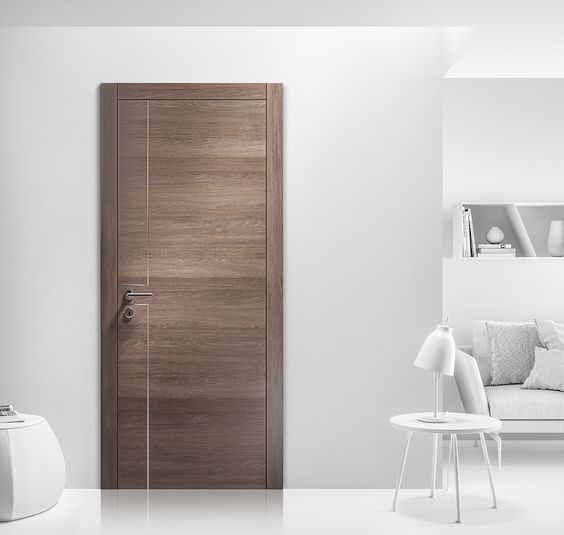
Flush doors have smooth, uninterrupted surfaces without traditional raised panels or heavy decorative details. They are especially effective in minimalist and contemporary interiors.
A flush door can be painted in the same shade as the wall to create a subtle appearance. Alternatively, a contrasting wood veneer or darker finish can turn the door into an attractive architectural feature.
Concealed-Frame Doors
Concealed-frame doors take minimalist design a step further. The frame is integrated into the wall, reducing the amount of visible trim around the opening.
This can create the impression that the door is almost part of the wall itself. It works particularly well in modern hallways, bedrooms, offices, dressing rooms, and other spaces where a clean appearance is important.
However, concealed systems require careful preparation and installation. Small alignment problems can become noticeable when the design depends on precise, uninterrupted lines.
Sliding and Pocket Doors
Sliding doors can be an excellent solution when floor space is limited. Unlike conventional hinged doors, they do not require a large swing area.
Pocket doors take this concept further by sliding into a cavity within the wall. They can be particularly useful for compact bathrooms, home offices, wardrobes, utility rooms, and spaces where furniture placement is restricted.
Choosing the correct opening system should be based on the room’s layout rather than appearance alone.
Glass Interior Doors
Glass can help distribute daylight between rooms while maintaining a clear division between spaces. Clear, frosted, smoked, and textured glass can provide different levels of privacy and visual connection.
For example, a glass door between a hallway and home office can allow daylight to reach a darker circulation area. Frosted or textured glass can provide greater privacy while still allowing light through.
Glass can also be combined with wood or slim metal framing for a more distinctive contemporary appearance.
Choosing the Right Material
Material affects the appearance, durability, maintenance requirements, weight, and overall feel of an interior door.
Natural Wood and Veneer
Wood provides warmth and natural character. Oak and walnut, for example, can complement modern furniture, timber flooring, stone, and neutral wall colors.
Natural wood veneer can provide the appearance of genuine timber while being used over an engineered door construction. The grain direction and color should be considered carefully when several doors can be seen from the same room.
Engineered Materials
Engineered wood products can provide consistency and dimensional stability while allowing manufacturers to create smooth, painted, veneered, or textured surfaces.
They are often useful when homeowners want a contemporary appearance without requiring every door to be constructed from solid timber.
Laminates and Modern Finishes
Laminate surfaces can offer a wide range of colors and textures and can be appropriate for areas that receive frequent use. Modern finishes may imitate wood, stone, fabric, or other subtle textures.
The best choice depends on how the door will be used and how its surface needs to perform over time.
The Importance of Door Hardware
Handles, hinges, locks, and other hardware can dramatically affect the final appearance of a door.
Minimalist interiors often benefit from simple lever handles in finishes such as black, brushed metal, bronze, or other coordinated tones. Traditional interiors may call for more decorative hardware.
Hardware should also be practical. A beautiful handle that feels uncomfortable or does not suit the door’s weight can reduce everyday usability.
When planning several rooms, using related hardware finishes throughout the property can create a stronger sense of continuity.
Matching Doors With Walls and Flooring
A door does not need to match every element in a room exactly. Instead, it should contribute to a balanced material and color palette.
Light-colored doors can help maintain an airy feeling, while darker wood or painted finishes can add contrast. A natural wood door may also introduce warmth into a room dominated by white, gray, concrete, stone, or other cool materials.
For a particularly seamless appearance, the door and wall can share a similar color. Conversely, a contrasting door can become a focal point.
The important principle is consistency. If several doors are visible from the same space, their proportions, finishes, and hardware should generally feel related.
Choosing Doors for Different Rooms
Different rooms have different requirements, so using exactly the same door construction everywhere may not be the best approach.
Bedrooms: Privacy and sound control are often important, making substantial hinged doors a practical choice.
Bathrooms: Moisture exposure should be considered when selecting the door material and finish.
Home offices: A solid door can provide separation, while glass can be useful when natural light is a priority.
Wardrobes: Sliding, bypass, or concealed solutions can save valuable floor space.
Living areas: Double doors or glazed systems can create a wider connection between rooms while maintaining some separation.
Hallways: Flush or concealed doors can reduce visual clutter and create a calmer architectural appearance.
Sound Control and Privacy
Interior doors can contribute to privacy and sound reduction, although their performance depends on the complete door assembly, seals, frame, wall construction, and installation quality.
For bedrooms, offices, media rooms, or other spaces where privacy matters, homeowners should consider the construction of the door rather than selecting one solely because it looks attractive.
A heavier or more acoustically designed door may be appropriate where sound transfer is a significant concern.
Why Installation Matters
Even a high-quality door can look disappointing if it is incorrectly installed.
Accurate measurements, suitable wall preparation, correct frame positioning, properly fitted hinges, and careful alignment all contribute to the finished result.
This becomes especially important with tall doors, concealed frames, pocket systems, and minimalist designs. When there are fewer decorative details to distract the eye, uneven gaps or poor alignment can become much more obvious.
For renovation projects, door dimensions should therefore be considered before walls, flooring, trim, and other finishing work is finalized.
How to Create a Consistent Door Scheme
If you are replacing several interior doors, it is useful to establish a complete design scheme before ordering.
Consider:
- Door height and width
- Swing direction
- Frame style
- Surface finish
- Material and color
- Hardware finish
- Glass requirements
- Privacy requirements
- Sound-control needs
- Available floor space
- Installation requirements
A consistent specification can prevent the home from appearing as though each door was selected separately.
Are European Interior Doors Suitable for Modern Homes?
For homeowners who prefer contemporary architecture, European interior doors can provide a combination of clean aesthetics and practical flexibility. Flush designs, concealed frames, sliding systems, natural wood, glass, and understated hardware can be adapted to many different interiors.
They can also work beyond minimalist homes. By changing the material, color, hardware, and panel design, European-inspired doors can complement transitional, Scandinavian, industrial, classic, or luxury interiors.
The key is to select a design that suits both the architecture and the way the space is used.
Final Thoughts
Interior doors have a greater influence on a home’s appearance than many homeowners realize. They occupy large areas of wall space, appear repeatedly throughout the property, and affect movement and privacy between rooms.
The appeal of European interior doors comes from their ability to combine architectural simplicity with practical design. Flush surfaces, concealed frames, natural materials, glass, space-saving opening systems, and carefully selected hardware can transform ordinary room entrances into cohesive elements of the interior.
Rather than choosing doors as an afterthought, consider them part of the overall design from the beginning. When their proportions, finishes, hardware, and functionality are coordinated with the rest of the home, the result can feel more spacious, refined, and thoughtfully designed.