
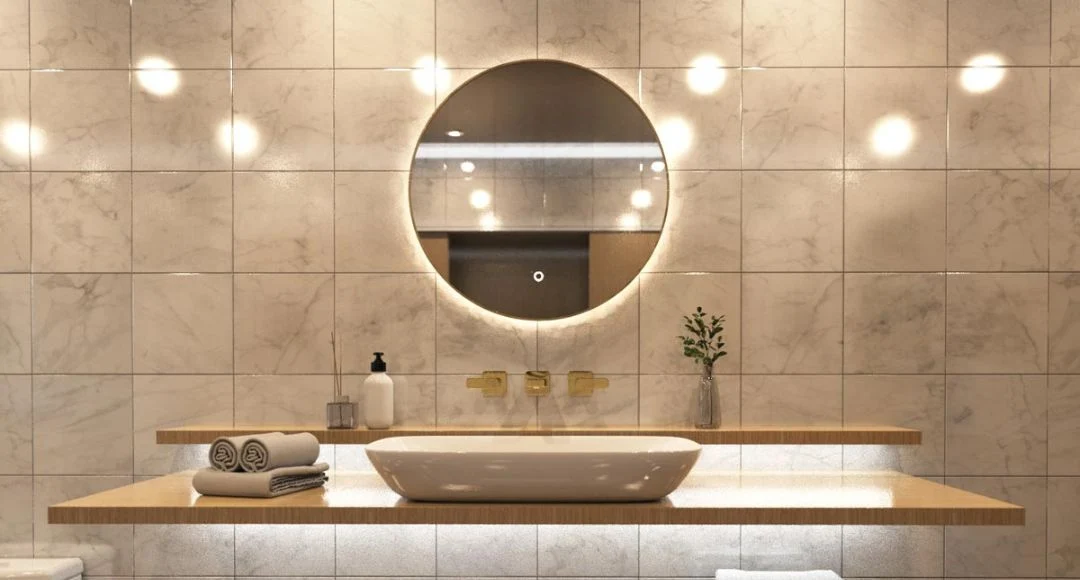
LED bathroom mirrors bring lighting and reflection together in a single fixture. They remove the shadows that overhead lights cast across your face and give a bathroom a clean, modern look.
Choosing well comes down to a handful of specifications and some planning. This guide covers the features, sizing, and installation details that matter most.
Why Homeowners Are Choosing LED Mirrors
The benefits show up in everyday routines:
- Even light at face level: Light built into the mirror softens the shadows that ceiling fixtures cast under the eyes and chin.
- Fewer separate fixtures: Integrated lighting can reduce the need for sconces or a light bar above the vanity.
- Efficient operation: LEDs use less energy than traditional bulbs and last far longer.
- A cleaner look: A single illuminated mirror replaces several fixtures with one tidy piece.
Lighting Specifications to Compare
Not every illuminated mirror performs the same. These details separate a quality mirror from a basic one:
- Color rendering index (CRI 90+): A high CRI shows skin tones and fabrics as they look in daylight, which helps with shaving, skincare, and makeup.
- Adjustable color temperature: A range from 3000K (warm) to 6000K (cool daylight) lets you match the light to the room or the task.
- Dimming: Low settings suit late-night visits, while full brightness helps with detailed grooming.
- Touch-sensor controls: A touch panel replaces bulky switches and wipes clean easily.
- Anti-fog function: A mirror that resists condensation stays usable after a hot shower.
Choosing a Shape and Style
The mirror’s shape should complement your vanity and the room’s overall design:
- Rectangular: A classic choice that suits most vanities and gives the widest reflection.
- Round or oval: Curved edges soften a bathroom with many straight lines.
- Backlit: Light glows behind the mirror, creating a soft halo effect on the wall.
- Front-lit: Light shines forward through the glass surface, providing stronger task lighting for grooming.
- Frameless or framed: Frameless designs look minimal, while framed mirrors add a defined edge and a style accent.
Sizing and Placement Tips
Proportion and position affect how well a mirror works:
- Match the vanity width: A mirror about two-thirds to the full width of the vanity usually looks balanced.
- Hang at eye level: The center of the mirror should sit near average eye height, roughly 57 to 65 inches from the floor.
- Leave breathing room: Keep a few inches of clearance from side walls, faucets, and other fixtures.
- Consider double vanities: Two separate mirrors or one wide mirror can both work, depending on the look you want.
Power and Installation Basics
An illuminated mirror needs electricity, so a little planning saves time:
- Locate the power source first: Find the nearest outlet or junction box before choosing a model.
- Check the wiring method: Some mirrors plug in, while others are hardwired. Hardwired installations should be handled by a licensed electrician.
- Look for safety certification: An ETL or UL listing confirms that the electrical components passed recognized testing.
- Mark the mounting points: Mounting into studs or proper anchors keeps a heavy mirror secure.
- Level before fastening: A slight tilt is easy to spot in a large mirror, so check it twice.
Care and Maintenance
A little routine care keeps the mirror looking sharp:
- Switch off before cleaning: Turn the power off and let the surface dry fully before you wipe it.
- Use a soft, lint-free cloth: Microfiber avoids scratches and streaks.
- Skip harsh chemicals: Abrasive cleaners can damage the mirror coating and edges.
- Spray the cloth, not the mirror: This keeps moisture away from the edges and electronics.
Final Thoughts
LED bathroom mirrors improve visibility, simplify your fixtures, and add a polished finish to almost any bathroom. Prioritize color accuracy, adjustable lighting, and anti-fog performance, then match the size and shape to your vanity and wall.
Support is worth weighing too. Retailers such as Allsumhome publish detailed installation guides and offer engineer support by phone or email, which helps first-time installers. Whichever supplier you choose, confirm those details before you buy.