

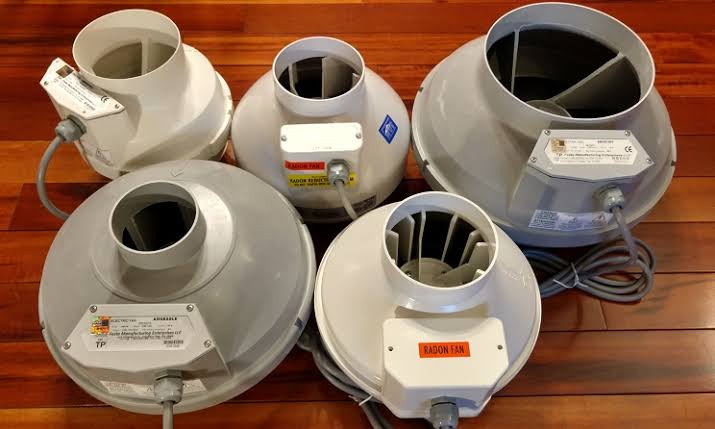
How to Choose a Radon Mitigation Fan for a Residential System
A properly designed radon reduction system depends heavily on the fan selected for the property. The right radon mitigation fan must produce enough suction to draw soil gases from beneath the building without creating excessive noise, vibration, or electricity use. Contractors and homeowners should therefore evaluate the building, piping, and pressure conditions before choosing a fan based only on its advertised airflow.
What Does a Radon Fan Do?
A radon fan creates negative pressure beneath a slab, crawlspace membrane, or other foundation barrier. This pressure difference pulls radon-containing soil gas toward a collection point and moves it through vent piping to a discharge location above the building.
Unlike a bathroom exhaust fan, a radon fan normally operates 24 hours a day. It must be rated for continuous use and installed in a permitted location, typically outside the occupied area. Depending on local requirements and the system design, the fan may be placed outdoors, in an attic, or in another unconditioned space.
Start With the Foundation Type
The foundation has a direct effect on the amount of resistance the fan must overcome. A basement with a concrete slab may require sub-slab depressurization, while a crawlspace may need a sealed membrane with suction beneath it. Homes with multiple foundation sections can require more than one suction point.
Before selecting equipment, inspect:
- The foundation type and total treated area
- The number and placement of suction points
- Soil or aggregate conditions beneath the slab
- Cracks, openings, drains, and utility penetrations
- Existing vapor barriers and sealing work
- The route and diameter of the vent pipe
Open gravel generally allows air to move more freely than dense soil or tightly packed fill. A system serving restrictive sub-slab material may need a fan that maintains suction at higher static pressure.
Compare Airflow and Static Pressure
Airflow ratings alone do not provide enough information for fan selection. A fan may move a large volume of air under low resistance but lose much of that capacity when connected to restrictive piping or dense sub-slab soil.
Static pressure indicates how much resistance the fan can work against. Contractors should review the manufacturer’s performance curve, which shows the relationship between airflow and pressure. The expected operating point should fall within the fan’s intended performance range.
A diagnostic pressure-field extension test can help determine whether suction reaches the necessary areas beneath the slab. Professionals may also use a manometer, pressure measurements, or temporary test holes to assess conditions before completing the system.
Account for the Pipe Layout
Pipe diameter, length, fittings, and vertical rise influence system resistance. Long pipe runs and repeated elbows create more friction, which can reduce performance. Poorly planned routing may force a contractor to install a more powerful fan than the building would otherwise require.
A shorter and straighter route is generally preferable. Installers should also support the pipe correctly and seal joints so that the system does not pull unnecessary air through leaks. Exterior discharge points must follow applicable clearance requirements for windows, doors, roof edges, and other openings.
Consider Noise and Vibration
Radon fans produce both airflow noise and mechanical vibration. These effects can become noticeable when equipment is mounted close to bedrooms, patios, or frequently used rooms.
Flexible couplings can limit the transfer of vibration from the fan to rigid piping. Proper brackets and pipe supports also help prevent rattling. When possible, installers should avoid placing the fan directly against a bedroom wall or close to an outdoor seating area.
Choosing an oversized fan does not always improve protection. It may create more noise, consume more power, and pull conditioned indoor air through unsealed foundation openings.
Check Continuous-Duty and Environmental Ratings
Because the fan operates without regular shutdowns, it must be designed for continuous service. Outdoor installations also require equipment approved for the expected moisture and temperature conditions.
Buyers should confirm:
- Continuous-duty approval
- Indoor or outdoor installation rating
- Compatible pipe sizes
- Electrical requirements
- Operating temperature range
- Warranty terms
- Required mounting orientation
A disconnect or service switch may also be required. Electrical work should follow local codes and be completed by a qualified person when necessary.
Verify Performance After Installation
Fan installation is not the final measure of success. The home should receive a follow-up radon test after the system has operated for the recommended period. This confirms whether indoor radon levels have fallen sufficiently.
Installers should also fit a system-performance indicator, such as a U-tube manometer, where occupants can see it. The indicator shows whether the fan is creating pressure, although it does not measure the home’s radon concentration.
Owners should be advised to check the indicator periodically, listen for unusual fan noise, inspect exposed piping, and retest the property according to professional or local guidance.
Correct fan selection begins with the building rather than the product label. Foundation conditions, system resistance, pipe routing, installation location, and verified test results all influence the final choice. Contractors and property owners can visit Suncourts to review radon-control products and find equipment suited to residential ventilation projects.